




Confucius in American Political Debate: Scholar vs Institute
Yiyang Zhuge's scholarly subject is Plutarch, the Greek biographer whose portraits of Roman and Greek statesmen shaped how America's Founders argued about republics and liberty. Nothing in her published interview mentions Confucius Institutes, the Chinese government-funded programs that have drawn scrutiny worldwide over foreign academic influence, or Chinese political thought of any kind. That absence isn't a headline. It's the starting point for a narrower question worth answering carefully: what does the available record actually establish about the difference between an individual scholar and a state-funded program, and where does that record run out?
No incident of anyone mistaking Zhuge for a representative of a Confucius Institute turns up in the material behind this piece. That matters less as a finding than as a boundary. This isn't a report on a mix-up; it's a close look at three things that get blurred once "Chinese" enters a sentence about academia: a scholar's actual research, a person's national origin, and a state-funded institution. The test case is Zhuge's real work, set against the documented Confucius Institute debate.
Zhuge credits "the unprecedented openness and excellent erudition" of the American political and education system for making possible what she calls "a relatively peaceful life of thinking and writing," according to her interview with the Jack Miller Center last year. She draws a modest parallel to Plutarch on one point specifically: like him, she says, she doesn't "take such protection for granted," the interview shows. That's a comment on how fragile academic security can be in general, not a claim about being confused with an agent of any government.
The reason such comparisons register at all traces to something real. Confucius Institutes have been established in more than 1,500 high schools and colleges worldwide since their debut in 2004, and they remain a live, global controversy over foreign academic influence, according to Cambridge Core research published last year. Using Zhuge's actual scholarship alongside that documented debate, this piece builds a working framework, resting on funding, output, and the nature of the concern raised, for keeping those three things separate.
What Zhuge's scholarship actually illuminates
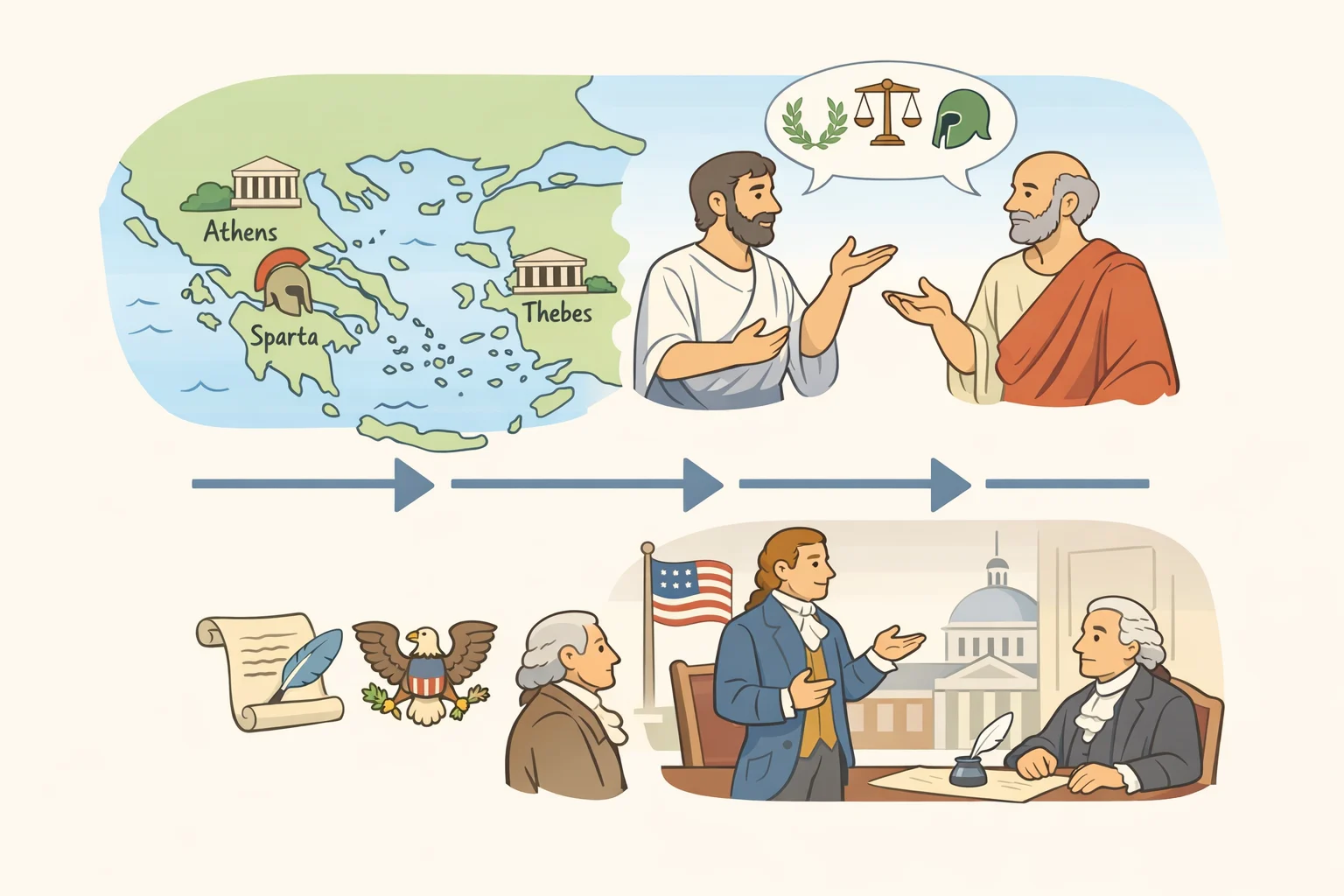
Zhuge's research traces how a Greek biographer became central to America's argument with itself over union, liberty, and republican design. Americans of the revolutionary and early republican eras debated the questions Plutarch's writing raised, and through those debates developed what Zhuge describes as a deep attachment to republicanism and an enthusiastic love of liberty, according to the Jack Miller Center interview. Plutarch, in her account, was "the Founders' favorite biographer," so central to revolutionary political culture that pamphleteers wrote under pseudonyms drawn from his Roman heroes, including Publius, Camillus, and Fabius.
That influence surfaces in some of the founding era's sharpest disagreements. At the Constitutional Convention, James Madison invoked Plutarch's account of Greek disunity, how the fragmented city-states left themselves open to Macedonian conquest, as a direct warning against American disunion, the interview notes. The lesson Madison drew was blunt: a free people who spend their liberty on constant internal strife, rather than on building a strong union, risk losing that liberty altogether.
The Founders also idolized Plutarch's Themistocles, and after the Revolutionary War took his account of the Persian Wars seriously as evidence that republican government held up better than centralized monarchy, Zhuge's research shows. Their eventual choice to build a mixed republic rather than a pure democracy owed a good deal to Plutarch's ambiguous portrayal of Athenian democracy, an ambiguity echoed in Thucydides, according to the same interview.
Plutarch's writing didn't produce consensus among the Founders so much as shared material to argue over. His mixed portrayal of Sparta split them along familiar lines: Samuel Adams and John Dickinson admired its frugality and courage, while Jefferson, Hamilton, and John Adams condemned its militarism, a disagreement Zhuge traces to a single classical source rather than to any settled political camp.
This is scholarship about how a classical text shaped an internal American argument over union, liberty, and the design of a republic. It contains no Chinese content to import or misrepresent. That's the baseline the rest of this piece measures against, because it shows what a scholar's actual output looks like when it's available for direct inspection rather than assumption.
The one documented controversy: Confucius Institutes and the American debate over Confucius

Confucius Institutes are the one documented controversy in this space, and their scope shows both what a well-evidenced dispute looks like and where the evidence runs out. Recent scholarship describes them as "a centerpiece of China's soft power policy," an effort to smooth Beijing's path to superpower status by expanding its global appeal, according to Cambridge Core.
Host institutions have often welcomed the programs as sources of funding and cultural enrichment. Critics, meanwhile, have called them spy outposts, neocolonial projects, and threats to academic freedom, the same research notes. Both reactions are on record, which is part of why the debate has stayed contentious rather than settling in either direction.
What the available research doesn't do is narrow this to an American story specifically. It describes a worldwide pattern spanning more than 1,500 schools and colleges, not a count of how many institutes currently operate in U.S. schools, how many have closed, or what U.S. policy has targeted directly. That gap matters: it means the American version of this argument is largely an inheritance of a global one, filtered through broader U.S.-China anxieties rather than built from domestic-specific evidence laid out here.
Confucius Institutes are one documented instance of a fight over money, sponsorship, and institutional control. They are not the full range of Chinese-linked academic activity, and they are not evidence about individual scholars. What the controversy is actually about, structurally, becomes the basis for the test that follows.
Where actual engagement with Chinese thought fits: the case of Lin Yutang
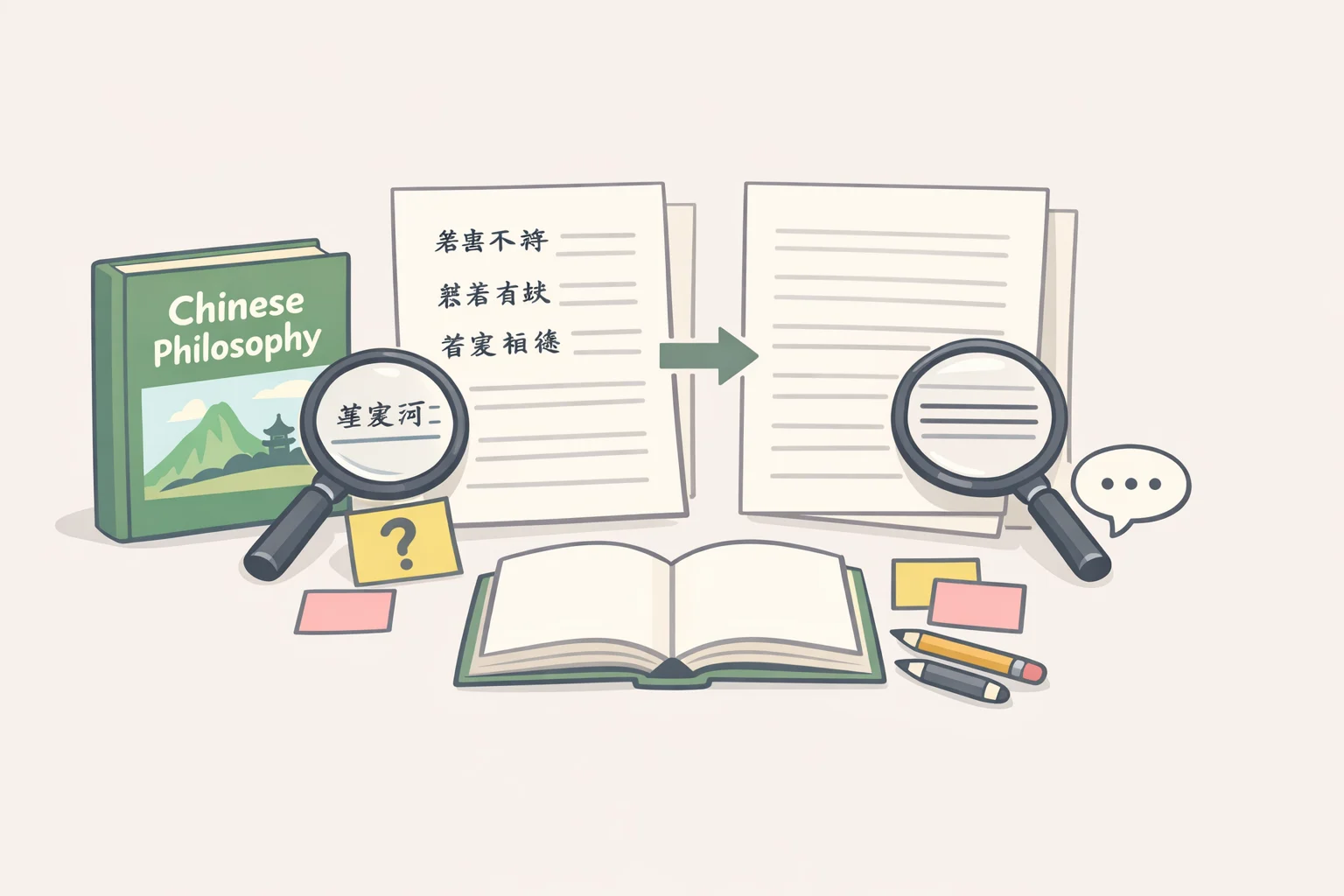
Not every scholar with roots in China avoids Chinese philosophy the way Zhuge does. Lin Yutang, a Chinese American writer based in the United States, produced thirty English-language works interpreting Chinese philosophy for a Western audience between 1936 and 1966, according to research published in Target, the translation studies journal, in 2024. His 1952 collection, Famous Chinese Short Stories, retold twenty tales from ancient Chinese sources using Western storytelling conventions, the same research shows.
Lin's case is a genuinely different category from both Zhuge and Confucius Institutes: a scholar whose documented output does engage Chinese thought, directly and at length, for an American readership. Critics accused him of bending to colonial power dynamics between China and the West, essentially arguing that his interpretive choices reshaped Chinese material to suit Western taste, the research notes. A more recent reassessment complicates that charge, describing Lin as a "partial Orientalist" who saw in Chinese tradition the potential for an alternative modernity rather than simple capitulation to Western expectations.
The point isn't that Lin's case proves anything about Confucius Institutes or about Zhuge. It's that his work shows what a real debate over interpretation and cultural authority looks like when it's grounded in an actual body of writing, a debate scholars can have sentence by sentence because the material is there to examine. That's a different kind of scrutiny than worrying about an institution's funding, and a different kind than speculating about a scholar whose actual subject never touches China at all.
Three distinct categories emerge from this: institutions funded by a foreign government, scholars whose documented output engages Chinese thought and can be debated on its interpretive choices, and scholars whose documented output doesn't touch Chinese material at all. Collapsing any two of these into each other is where the analysis breaks down.
A framework for telling institutions from individuals
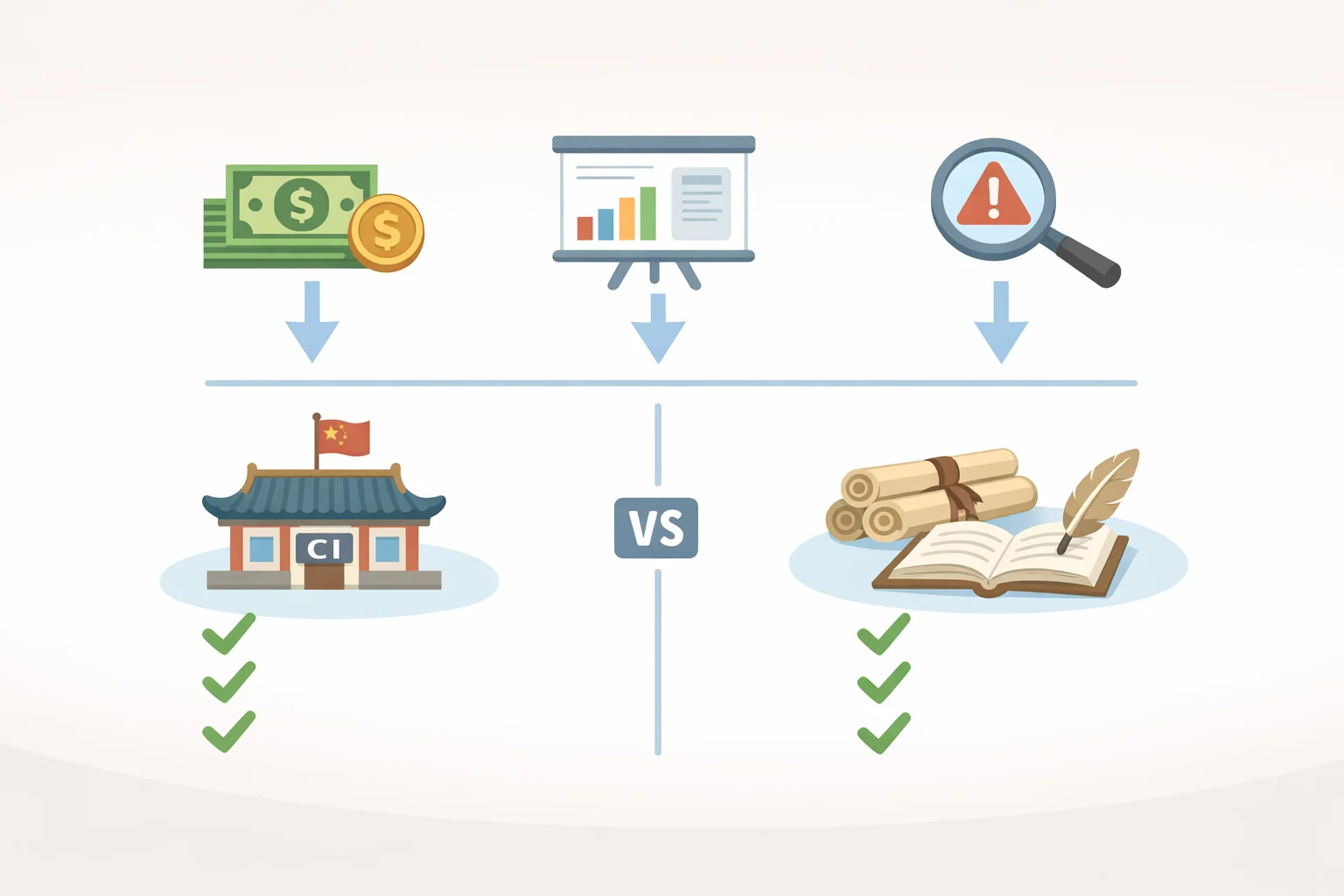
Three questions separate institutional scrutiny that's earned from suspicion that's merely assumed: funding, output, and the nature of the concern itself. Applying each to Confucius Institutes and to Zhuge's case side by side shows where the two diverge, and the record for her case is limited enough that stating that limit plainly matters.
Test 1 is funding. Confucius Institutes are, by definition, funded by the Chinese government and have been established in more than 1,500 high schools and colleges worldwide since 2004, according to Cambridge Core. Zhuge's interview describes an individual career built on U.S. institutional openness. No foreign-government funding relationship appears anywhere in the documented record, which is a fact about what's on the record rather than proof that no such relationship could ever exist.
Test 2 is output. Confucius Institute critiques center on institutional programming across a global network, not on any single scholar's publications, the Cambridge Core research shows. Zhuge's actual output is traceable and specific: it's about Plutarch and the American founding, available for anyone to read and evaluate directly. That's a different kind of evidence than an institutional affiliation, and it's evidence a reader can check without taking anyone's word for it, the way the Lin Yutang debate got checked sentence by sentence.
Test 3 is the nature of the concern. Is the objection aimed at a documented arrangement, a funding relationship, a governance structure, or is it aimed at a name and a birthplace standing in for one? Confucius Institute critics point to structural ties as the basis of their objection. Nothing comparable appears in the record on Zhuge, and that gap is precisely why treating her as a parallel case would be the error this framework exists to catch.
Institutions leave a paper trail: funding relationships, sponsorship agreements, the terms under which they were established. Scholars leave a different kind of trail entirely, one made of published work and documented affiliations, examined on its own terms. The real risk isn't a pattern already observed in Zhuge's case. It's that a global, well-documented controversy over one type of institution makes it tempting to extend institutional suspicion onto an individual whenever tensions between Washington and Beijing surface in public conversation.
Conclusion
Zhuge's documented scholarship traces Plutarch's influence on American republicanism, from Madison's warning against disunion to the Founders' quarrel over Sparta. That makes her a contributor to how America understands its own founding, not an importer of Chinese thought. The one documented controversy in this space, Confucius Institutes, is a global dispute over government funding and institutional sponsorship, established in more than 1,500 schools and colleges worldwide since 2004, not a finding about individual scholars or about Chinese philosophy generally.
The three tests set out here, funding, output, and the nature of the concern, offer a defensible way to separate institutional scrutiny from identity-based suspicion. But the framework has a limit worth stating outright: it can identify what kind of evidence would justify concern about a scholar. It cannot manufacture that evidence where the record simply doesn't contain it. Nothing in the material available on Zhuge clears even the first of the three tests, and no amount of framework-building changes that.
The practical habit worth taking from this isn't about Zhuge specifically. It's a standard worth applying whenever a claim about Chinese academic influence surfaces in American political debate: look for a funding arrangement, an institutional directive, or a documented pattern of conduct before treating a name or a birthplace as evidence of anything. Whenever tensions between Washington and Beijing surface in public conversation, that standard is what keeps a real controversy over institutions from bleeding into suspicion of the individuals who simply share a nationality with it.

















Comments
Be the first, drop a comment!