



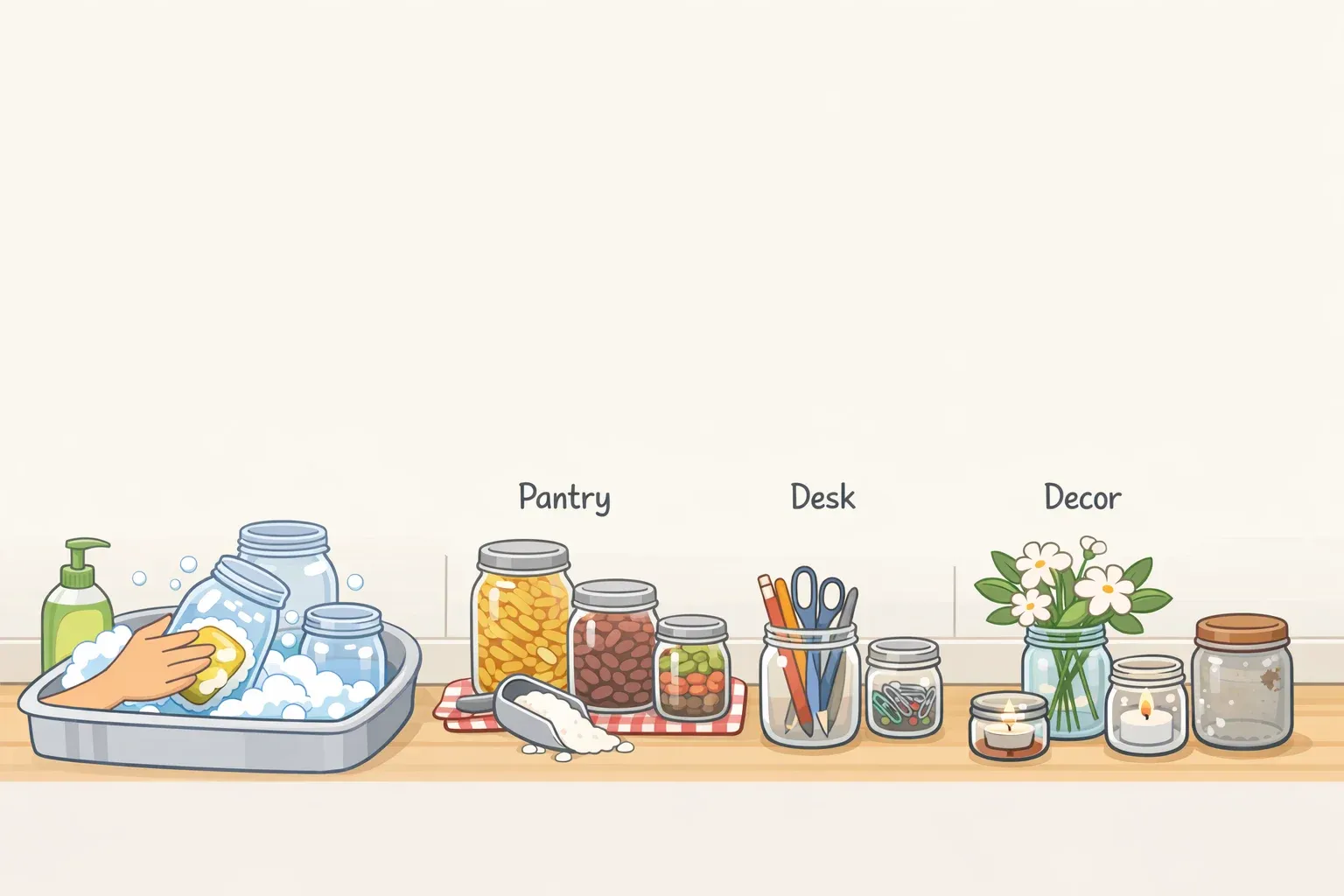
Ways to Reuse Old Mason Jars: 15 Practical Ideas by Jar Size
The best ways to reuse old mason jars start with one question: what is this jar actually capable of? Condition and size determine the answer. This guide covers exactly 15 reuse ideas, organized by a simple framework: inspect first, sort by condition, then match jar size to job. By the end, you'll know which jars belong in the pantry, which go on a desk or countertop, and which should be redirected to decor or discarded.
Start with the baseline case for keeping jars: canning jars in good condition are reusable for years, according to UNH Extension. All they need is a wash and a quick once-over. The default position should be "keep and use," not "put in the recycling bin." Reusing a jar in its original form sidesteps the energy, transportation, and processing costs that recycling requires, per a peer-reviewed USU Extension fact sheet. Glass jars need only a quick cleaning before they're ready for another round.
One qualifier worth stating upfront: "safe to reuse" and "safe for canning" are not the same standard. Most of the 15 uses below don't involve heat processing at all, which means jars that can no longer can are still fully functional for the majority of these applications.
What to do with old mason jars: sort first, then assign a job
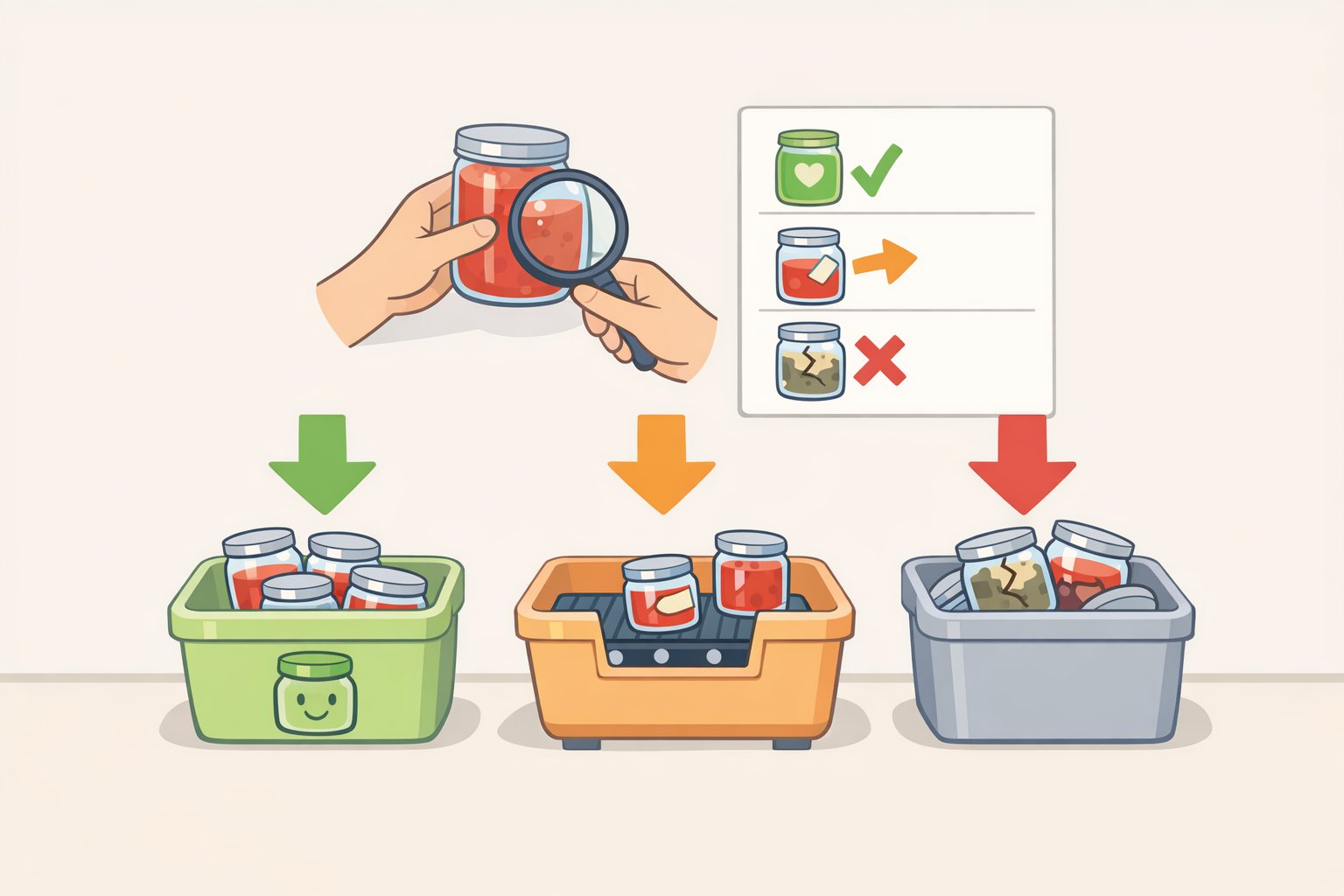
Before assigning any jar a new use, run every jar through a hot wash. Dishwasher or hand-wash with hot, soapy water both work, per UNH Extension. While the jar is clean and dry, make one of three calls.
Discard: Any jar with a visible crack or hairline fracture. Cracked glass can fail without warning under temperature stress. This applies regardless of intended use.
Redirect to non-food or decor use: Jars with rim nicks or chips run a finger around the lip; if it catches, the jar won't seal reliably for food. Also redirect jars whose original packaging carried a "not for canning" warning, per Iowa State Extension. Bail-wire hinged-clasp jars fall here too, as they're not recommended for food preservation, per UNH Extension, as do tulip-shaped or oddly contoured jars. None of these flaws matter for a pen holder, candle container, or dry-goods display.
Keep for food use: Undamaged, straight-sided threaded jars with clean, smooth rims. These are ready for any of the 15 uses below.
Thermal shock warning: Don't fill a cold jar with hot liquid. UNH Extension is explicit: the temperature difference can crack the glass. Let hot food cool first, or warm the jar with hot water before filling. This applies any time you're packing hot soup, stew, or coffee not just when canning.
A note on lids and bands: The flat metal lid is designed for one use only don't reuse it for canning, per UNH Extension. The metal screw band can be reused indefinitely as long as it's not bent, rusty, or misshapen. Once jars cool, remove the band, wash it, dry it, and store it separately. For non-canning storage, any lid that closes snugly is sufficient; plastic storage lids made for mason jars are a practical upgrade. Label each jar with contents and date before storing.
Step 2: 15 ways to reuse old mason jars, organized by size
Size and mouth width determine what a jar does well. Here's how to think about each size tier and the specific uses each one handles best.
Small jars (4–8 oz): spices, small portions, and hardware
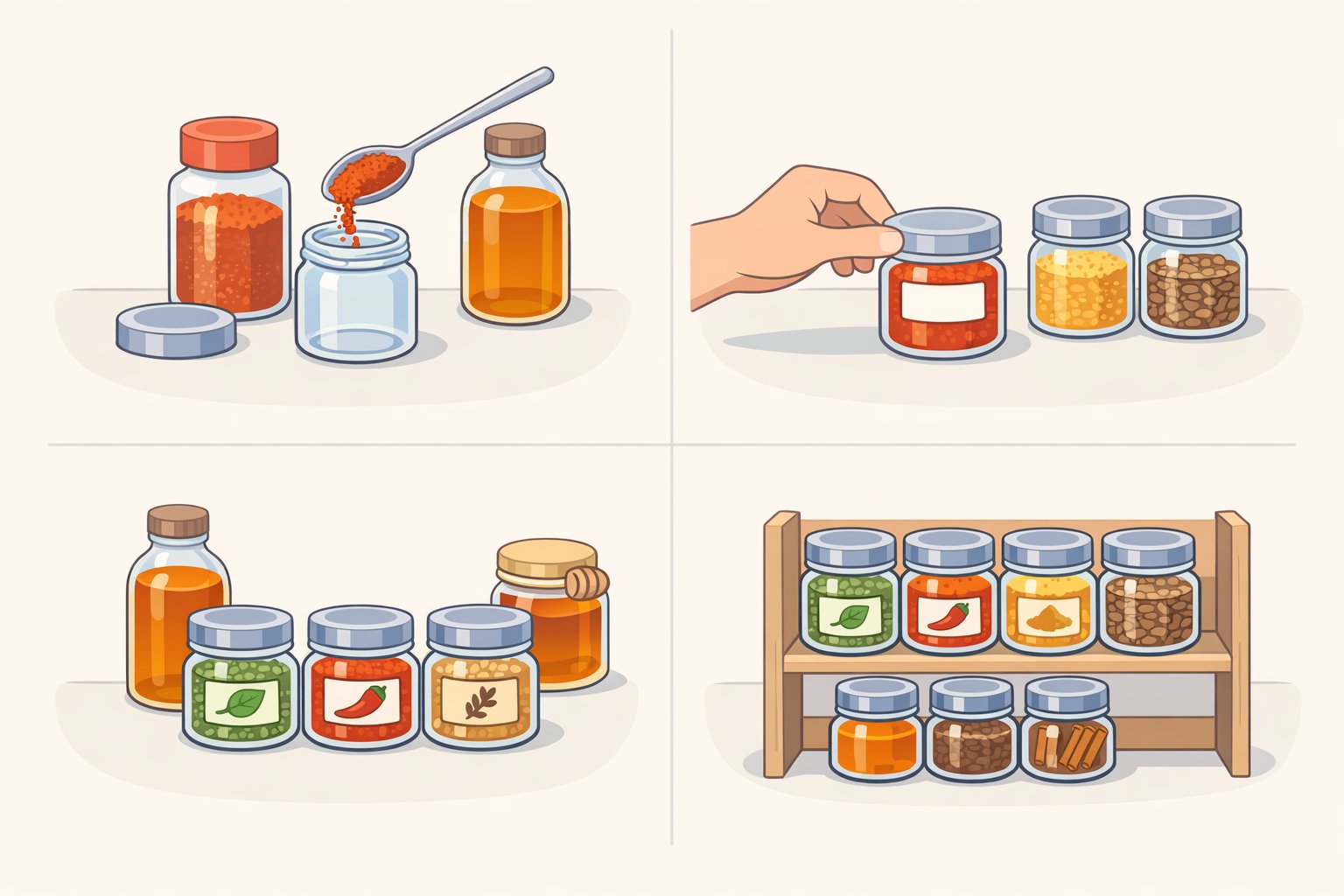
1. Spice and herb storage. Decant dried herbs and spices from oversized bags into labeled small jars. Standard canning jars come in 4- and 8-oz sizes with both regular and wide-mouth openings, per Iowa State Extension, and both work well for a spice rack.
2. Amber-glass pantry upgrade. If any of your small jars are amber-colored, this is where they earn their place. Amber glass blocks UV rays that trigger photo-oxidation the process that degrades flavor, color, and nutrients in light-sensitive ingredients. Foods like baking ingredients, oils, herbs, spices, coffee, and tea can sit on a countertop in an amber jar without quality loss, per Iowa State Extension. A clear jar with the same contents needs a dark cabinet for equivalent protection. On top of that, glass doesn't leach harmful chemicals into stored contents the way plastic containers can, per Iowa State Extension. A reused amber jar genuinely outperforms a new clear container for these ingredients that's not a consolation prize, it's a better outcome.
3. Single-serve condiment jars. Homemade hot sauce, jam, pesto, or salad dressing in a 4-oz jar travels neatly in a lunch bag and rinses clean when empty.
4. Small hardware and craft supply storage. Screws, nails, buttons, safety pins, earring backs small jars with lids keep these from migrating into everything else in a drawer. The transparency does the work: you can see what's inside without opening anything.
Pint jars (16 oz): the most useful size in the kitchen
5. Shake-and-go salad dressing. Add olive oil, vinegar, salt, pepper, and seasoning directly to the jar, seal the lid, and shake. USU Extension cites this exact use. No extra bowl, no cleanup beyond a rinse.
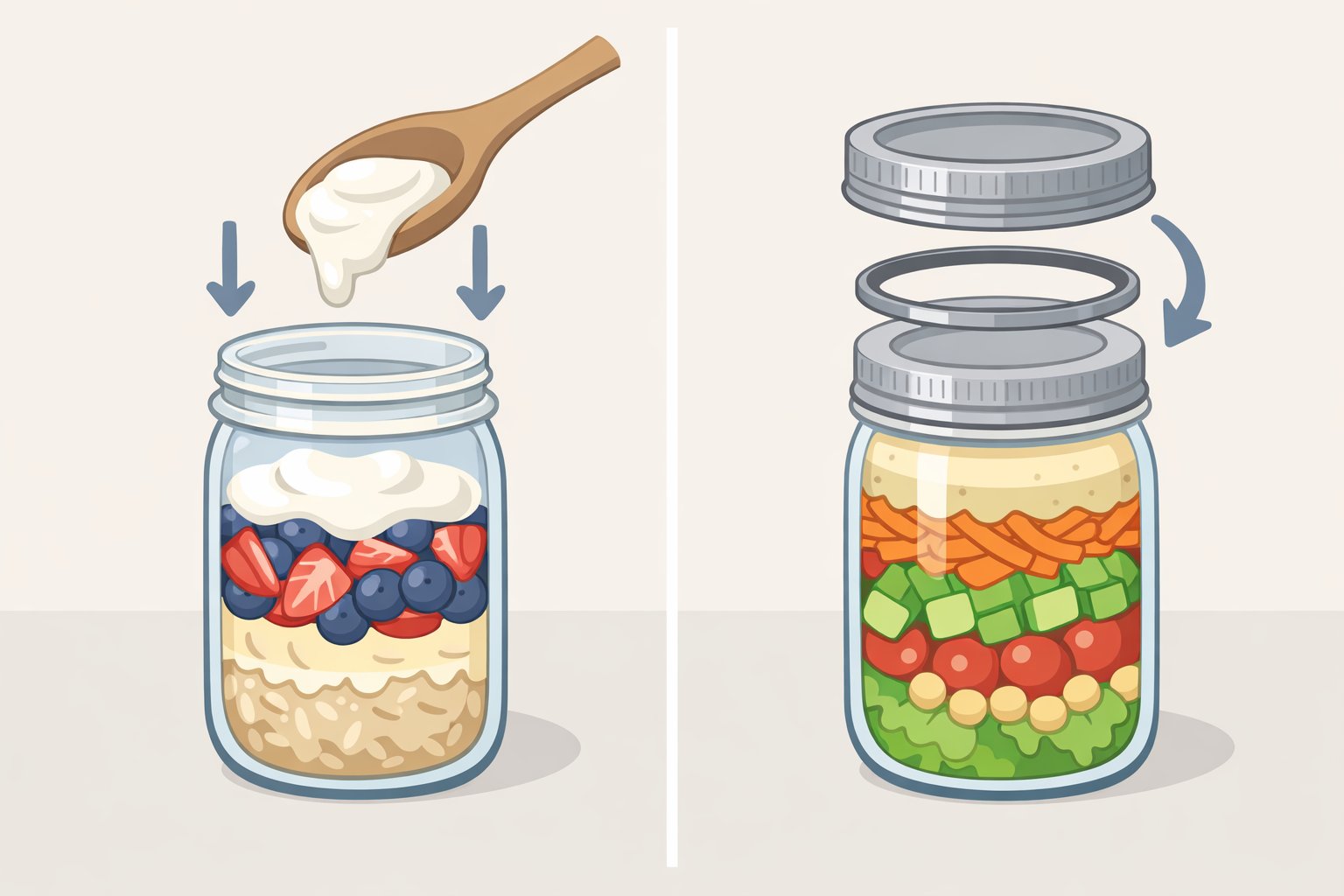
6. Lunch containers. USU Extension specifically identifies mason jars as effective lunch containers. Layered salads, grain bowls, and overnight oats hold their structure well when packed into a sealed pint jar. Wide-mouth pints make loading and eating significantly easier; narrow-mouth pints work but require more patience with a spoon.
7. Homemade cleaning solution storage. A lidded pint jar near the sink holds cleaning solution between uses. USU Extension suggests exactly this application dip an old toothbrush directly into the jar to scrub grout lines, faucet bases, or tile corners.
8. Leftover sauces, stocks, and soups. Pint jars in the refrigerator hold single-meal portions neatly and stack better than most takeout containers. Apply the thermal-shock rule from the sorting step: let hot contents cool before sealing in glass.
Wide-mouth quart jars (32 oz): countertop organization and pantry staples
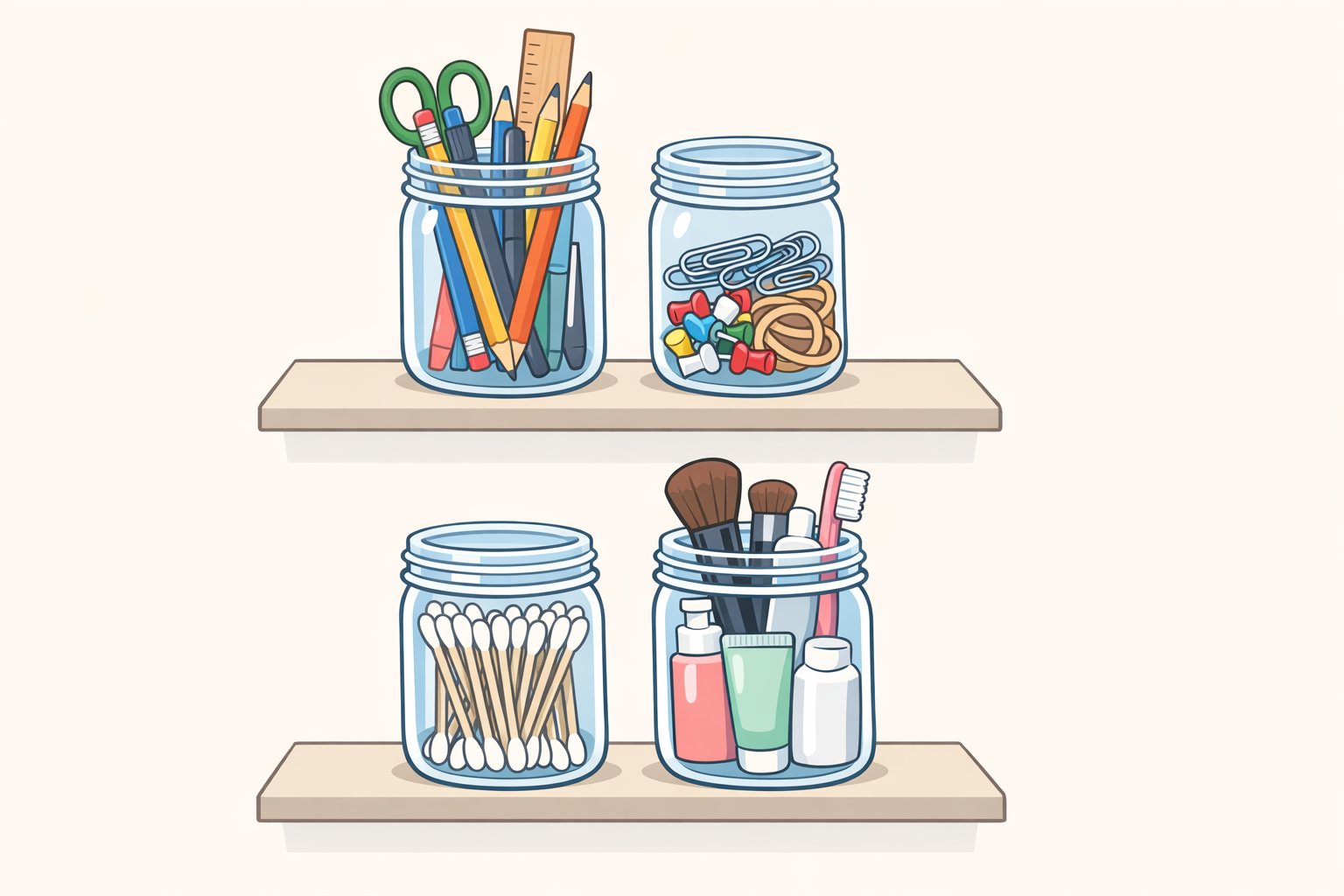
9. Bulk dry-goods storage. Lentils, rice, oats, pasta, and flour move from their original bags into labeled quart jars. Glass doesn't leach harmful chemicals into stored contents the way plastic containers can, per Iowa State Extension, and you can see when you're running low without opening anything.
10. Desk supply organizer. Wide-mouth quart jars hold pens, scissors, rulers, and markers without toppling. The wide mouth matters narrow-mouth quarts make retrieval awkward. Wash in the dishwasher, relabel for a different use, repeat.
11. Bathroom counter organizer. Cotton swabs, cotton rounds, hair ties, and makeup brushes all fit cleanly in a quart jar on a bathroom shelf. Transparent, washable, and already owned.
12. Bud vase. A clean quart jar with a few inches of water makes a functional vase. Stretch a loose grid of rubber bands across the mouth to hold stems upright and positioned. Short jars work for herbs and small-stemmed flowers; taller jars handle longer stems.
Half-gallon and gallon jars: bulk and display
13. Bulk pantry storage for large dry goods. Half-gallon jars are only recommended for canning highly acidic juices testing has shown inadequate heat penetration to the center of the jar for other preservation uses, per Iowa State Extension. For dry storage of flour, sugar, coffee, or rolled oats, they're an excellent large-capacity container with no such limitation.
14. Utensil crock. A half-gallon wide-mouth jar on a kitchen counter holds wooden spoons, spatulas, and tongs. Stable, washable, and more useful-looking than a plastic container doing the same job.
15. Candle holder or lantern. Any jar sorted into "decor only" chipped rims, odd shapes, "not for canning" jars belongs here. Drop a tea light into a clean jar. Small jars work as individual candle holders; larger jars function as lanterns. This is the right category for decorative use: functional, low-effort, and not dependent on the jar meeting any food-contact standard.
Quick-reference: which jar goes where
| Jar condition | Best for |
|---|---|
| Undamaged, clean rim | Any food use: kitchen, pantry, lunch packing |
| Amber glass, undamaged | Light-sensitive pantry staples: oils, spices, coffee, tea |
| Chipped rim, otherwise intact | Non-food organization, decor, candle holders |
| "Not for canning" labeled | Dry storage, organization, decor not heat applications |
| Bail-wire / hinged clasp | Dry goods, display not food preservation |
| Cracked or fractured | Discard |
Put them to work this afternoon
Run the sorting pass once cracked jars go out, chipped jars go to decor, everything else gets assigned a job. The system maintains itself from there.
If you're reconsidering pantry storage at all, the amber-glass point is worth acting on first. A reused amber jar on the counter keeps UV-sensitive ingredients in better condition than a new clear jar stored in the open, per Iowa State Extension. That's worth knowing before spending money on new containers.
For craft applications beyond this scope soap dispenser lids, plant propagation stations, layered gift jars dedicated DIY sources will serve better. The 15 uses above are grounded in extension research, which makes them a narrower set than most mason jar content, and a more reliable one.










Comments
Be the first, drop a comment!